Colorado Roofing Permits: Storm Damage Rules & Home Protection
Colorado Roofing Permits: Storm Damage Rules & Home Protection
Colorado’s weather can shift from sunshine to severe hail in minutes, which is why roofing rules in the state are stricter than many homeowners expect. If you’ve recently faced storm damage and home protection concerns, knowing the roofing permit requirements in Colorado becomes essential. Whether you manage a property, plan to sell, or have experienced storm-related roof issues, understanding the process helps you avoid compliance problems and delayed repairs.
This guide breaks down when a permit is needed, how to apply for one, what fees look like, and why inspections matter. You’ll also find practical tips sourced from real Colorado roofing scenarios and industry-backed regulations.
Roofing Regulations and Permits in Colorado
Colorado enforces building codes differently at the city and county levels, but most municipalities follow the International Building Code and International Residential Code. Understanding these allows you to keep any roof work compliant and safe.
When Do You Need a Roof Permit in Colorado?
You generally need a permit anytime work goes beyond cosmetic maintenance. For Colorado roofing permits, this includes:
Full roof replacement
Structural repairs
Decking replacement
Major roof leak repair
Storm-damage repairs requiring shingle, tile, or membrane removal
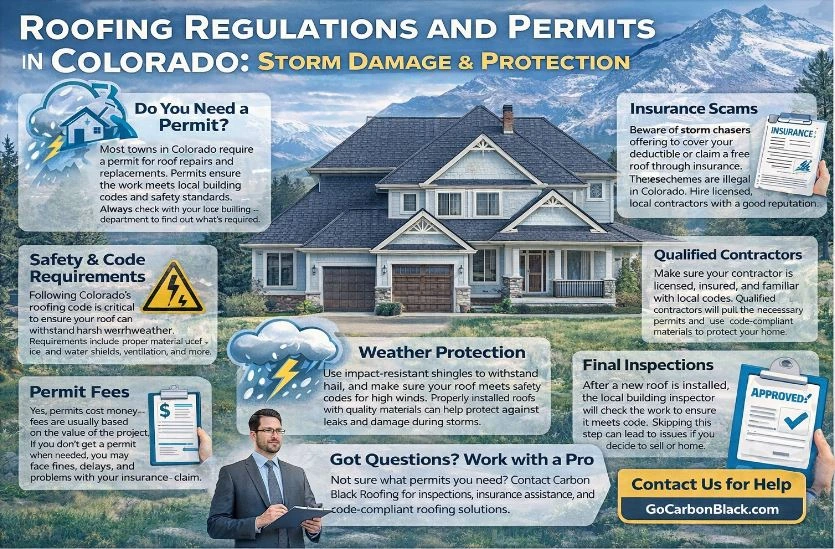
A roof replacement permit is required in nearly every county because removing old materials affects structural safety. Likewise, a roof repair permit for Colorado homes is required when the repair goes deeper than surface patching.
Minor maintenance, such as gutter cleaning, small shingle resealing, or moss removal, typically does not require a permit. However, when storm damage is involved, most insurers require proof of permitted work to approve coverage.
How to Apply for a Roofing Permit in Colorado
The exact application process varies by municipality, but most follow similar steps:
- Confirm local requirements through your city or county building department.
- Submit permit applications, usually online.
- Provide contractor details, material specs, and installation plans.
- Wait for approval, typically within 1 to 3 business days.
- Post the permit visibly at the job site before work begins.
Homeowners often prefer working with a contractor who handles the process on their behalf. Reputable roofing teams, like those at Carbon Black Roofing, help ensure all compliance steps are completed properly and on time.
Colorado Roofing Permit Fees and Inspections
Roofing permit fees in Colorado vary depending on the city and the size of the project. Most homeowners can expect:
- Permit fees: 50 to 300 dollars for standard projects
- Inspection fees: Usually included in the permit cost
- Reinspection fees: 30 to 100 dollars if corrections are needed
Most Colorado municipalities require at least one final inspection, though some require mid-project inspections to verify decking and underlayment before shingles are installed. Colorado local building codes directory.
Why Roofing Permits Matter for Storm Damage and Home Protection
Storms can cause hidden structural issues that only trained inspectors can identify. Roofing permits protect homeowners by ensuring:
- Proper construction practices
- Safe removal and disposal of damaged materials
- Insurance compliance
- Code-approved materials suitable for Colorado’s climate
- Higher resale value and improved home safety
Using a certified roofing contractor, like those featured at Carbon Black Roofing, helps safeguard your home and avoid liability problems.
Common Permit Mistakes Colorado Homeowners Should Avoid
- Starting work without a permit. Fines can be costly, and insurance claims may be denied.
- Hiring contractors who skip permitting. This may lead to code violations and unsafe installation.
- Not scheduling inspections. A missed inspection can void warranties or delay insurance processing.
- Underestimating storm-related damage. Always request an inspection after hail or high wind events.
View signs of storm or hail damage here.
Common Permit Mistakes Colorado Homeowners Should Avoid
- Starting work without a permit. Fines can be costly, and insurance claims may be denied.
- Hiring contractors who skip permitting. This may lead to code violations and unsafe installation.
- Not scheduling inspections. A missed inspection can void warranties or delay insurance processing.
- Underestimating storm-related damage. Always request an inspection after hail or high wind events.
View signs of storm or hail damage here.
Permit Questions? Talk to Colorado’s Roofing Pros
If you’re unsure whether your project needs a permit or you want help navigating the process, reach out to the experts. Carbon Black Roofing offers inspections, insurance support, and code-compliant roofing solutions. Contact the team here.
FAQ
1. Do all Colorado cities require roofing permits?
Most municipalities in Colorado require roofing permits for replacements and major repairs. Requirements vary by city, so checking your local building department is essential.
2. How long does it take to get a roofing permit in Colorado?
Most counties process permits within 1 to 3 business days. Delays can occur during storm season when application volume increases.
3. Can I apply for a Colorado roofing permit myself?
Yes. Homeowners can apply directly, but many choose to have licensed contractors handle it to avoid errors and ensure compliance.
4. What happens if I skip the roofing permit?
You may face fines, failed inspections, insurance denials, or forced removal of non-compliant work. Always verify permit requirements before starting a project.
5. Does insurance require proof of a roofing permit?
In many cases, yes. Insurance companies often request documentation to confirm that repairs or replacements were performed to code.
Key Takeaways
- Colorado requires permits for nearly all roof replacements and major storm damage repairs.
- Permit fees range from 50 to 300 dollars depending on the municipality.
- Inspections are mandatory and ensure safe, code-compliant roofing systems.
- Permits protect homeowners from insurance claim issues and unsafe installations.