Chimney & Flashing Maintenance Tips: Roofing Basics for Storm Damage & Home Protection
When it comes to roofing basics, few areas are more important than your chimney and roof flashing. These components prevent water intrusion but are often overlooked until leaks appear. In Colorado’s unpredictable weather, chimney & flashing maintenance is essential for storm damage prevention and overall home protection. Strong winds, hail, ice, and temperature swings can weaken seals, crack mortar, or dislodge flashing quickly. This guide explains what homeowners need to know about chimney and flashing care, the common signs of trouble, and how to keep your roof performing at its best.
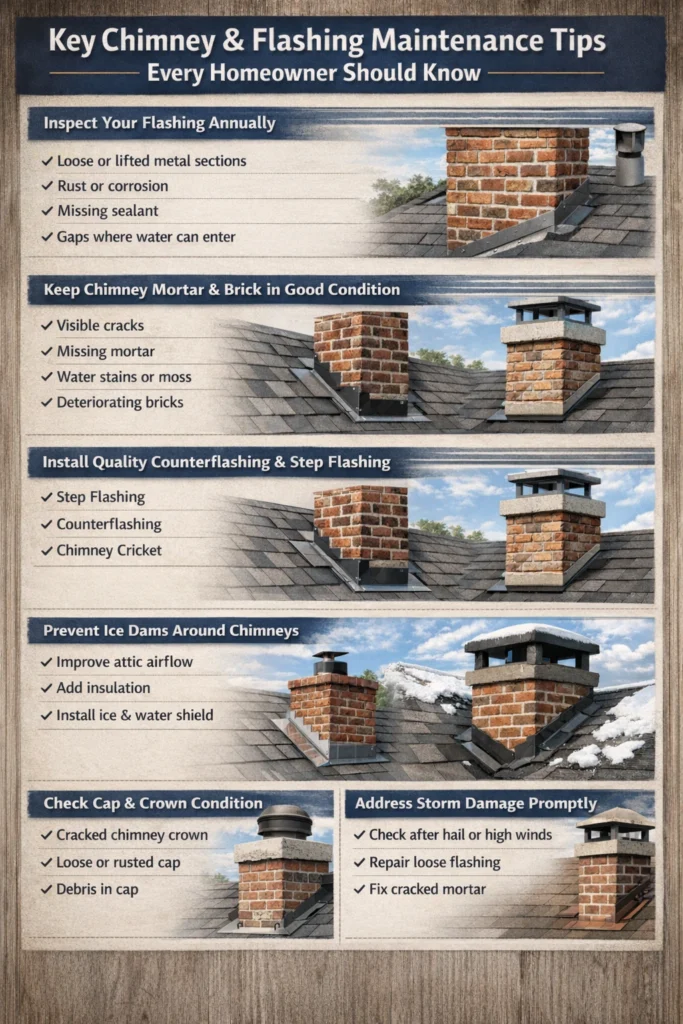
Key Chimney & Flashing Maintenance Tips Every Homeowner Should Know
Inspect Your Flashing Annually
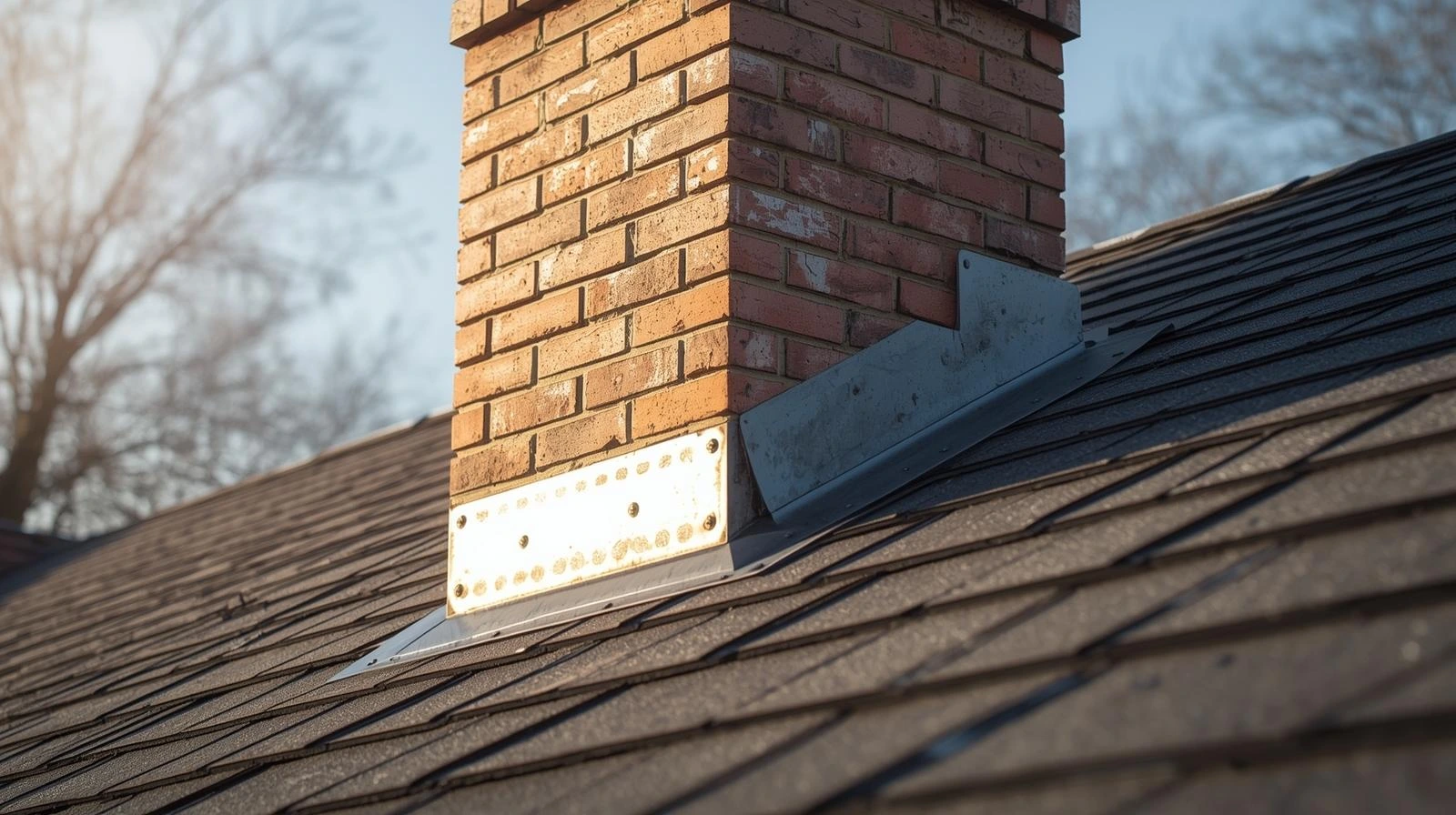
Flashing is the first line of defense against water penetration around chimneys. A quick yearly inspection helps identify issues before storms make them worse.
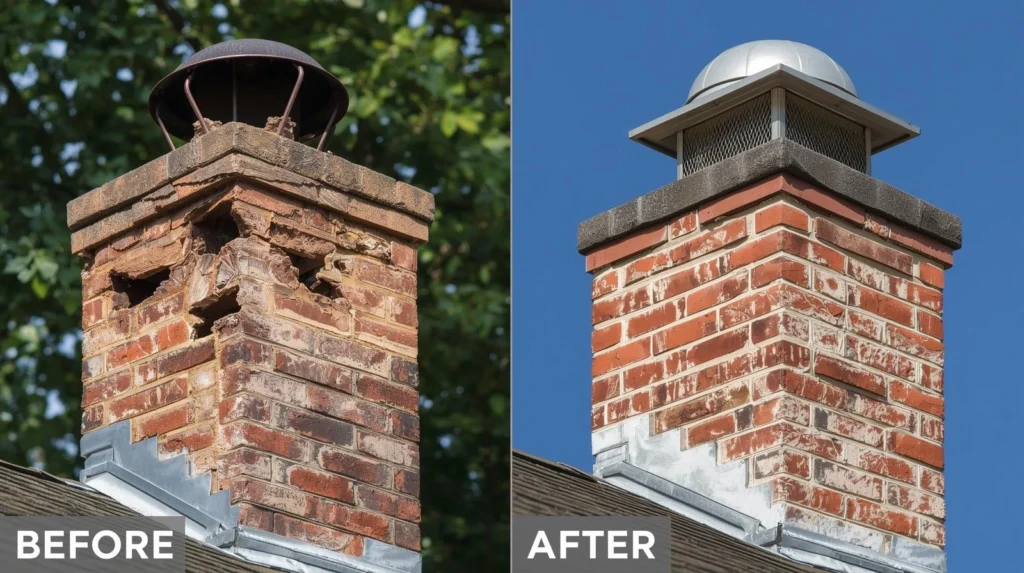
Chimney masonry naturally deteriorates over time. Cracks, crumbling mortar, and porous bricks can allow water to seep into the home or weaken the chimney structure.
Watch for:
Visible cracks
Missing mortar
Discoloration indicating water absorption
Moss or algae growth
Minor masonry repairs and sealing can prevent major storm-season damage.
Install High-Quality Counterflashing and Step Flashing
A chimney requires layered flashing for full protection:
Step flashing: Installed where roof shingles overlap brick or siding.
Counterflashing: Set in mortar to cover step flashing.
Cricket or saddle flashing: Used behind large chimneys to divert water.
Without all three, expect leaks in heavy rain or snowmelt.
Prevent Ice Dams Around Chimneys
Ice dams form when melting snow refreezes along roof edges or behind chimneys. Poor ventilation and insulation make this problem worse.
A chimney cap prevents rain, debris, and wildlife from entering the flue. The crown protects the top masonry layer.
Check for:
Cracked chimney crowns
Loose or rusted caps
Debris blocking ventilation
A well-maintained cap reduces moisture that can compromise flashing and roof decking.
Address Storm Damage Immediately
After hailstorms or high winds, chimney flashing may shift or warp, and hail can crack mortar or damage caps. Quick action and chimney & flashing maintenance reduce long-term repair costs and prevent water infiltration.
Many Colorado homeowners schedule post-storm inspections through CarbonBlack Roofing to address chimney and flashing concerns early.
If you suspect chimney or flashing issues, or want a professional inspection before storm season, the CarbonBlack Roofing team is ready to help. Schedule your service here.
FAQ
1. How often should chimney flashing be inspected?
At least once a year, and after major storms. Flashing is prone to wear and shifts caused by wind and ice.
2. What causes chimney leaks?
Common causes include failing flashing, cracked mortar, poor sealing, and damaged chimney crowns or caps.
3. Can damaged chimney flashing cause structural issues?
Yes. Water infiltration can lead to mold, wood rot, damaged drywall, and weakened roof framing.
4. Do chimneys require special flashing materials?
High-quality metal such as galvanized steel or copper is recommended for durability against storms and moisture.
5. Should chimney repairs be DIY or professional?
Chimney and flashing repairs involve structural and roofing expertise. Professional work ensures long-term protection and code compliance.
Key Takeaways
Chimneys and flashing are common leak points requiring regular maintenance.
Strong, layered flashing systems prevent water and storm damage.
Masonry care improves structural durability and reduces moisture risks.
Ice dams and poor ventilation increase chimney-related roof issues.
Professional inspections improve home safety and long-term performance.