Neighborhood Storm Preparation: A Practical Guide for Communities

“We’ll Figure It Out If It Happens”… Or Will We?
Most of us mean to get ready for storms… eventually. Then the sky turns green, the alerts go off, and suddenly everyone is scrambling for flashlights, batteries, and a roofer’s phone number at the exact same time.
That’s where Community & Local Coverage changes the game. With neighborhood storm preparation, neighborhoods plan together before the next big storm by sharing information, contacts, and responsibilities. Everyone recovers faster and feels less alone. The good news is it doesn’t have to be complicated or formal to make a huge difference.
According to FEMA’s emergency preparedness guidance, planning ahead at both the household and community level is one of the most effective ways to reduce risk and speed up recovery after severe weather.
What Can Neighborhoods Do Together to Prepare for the Next Big Storm?
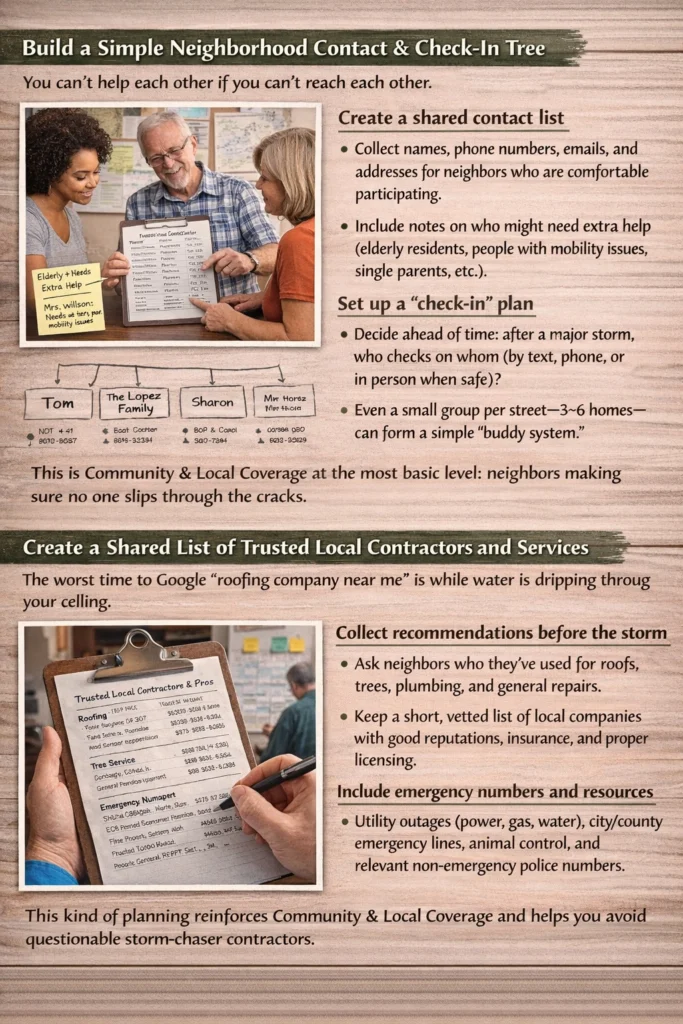
1. Build a Simple Neighborhood Contact & Check-In Tree
You can’t help each other if you can’t reach each other. Neighborhood storm preparation starts with simple communication and a clear plan.
Create a shared contact list
Collect names, phone numbers, emails, and addresses for neighbors who are comfortable participating.
Include notes on who might need extra help (elderly residents, people with mobility issues, single parents, etc.).
Set up a “check-in” plan
Decide ahead of time: after a major storm, who checks on whom (by text, phone, or in person when safe)?
Even a small group per street, 3–6 homes, can form a simple “buddy system.”
This is Community & Local Coverage at the most basic level: neighbors making sure no one slips through the cracks.
The American Red Cross also emphasizes the importance of communication plans and neighbor-to-neighbor support as a core part of emergency preparedness.
2. Create a Shared List of Trusted Local Contractors and Services
The worst time to Google “roofing company near me” is while water is dripping through your ceiling.
Collect recommendations early
Ask neighbors for trusted roof, tree, plumbing, and repair pros. For help after storm and damage, visit GoCarbonBlack’s Storm & Hail Damage Services to connect with trusted pros.
Keep a short, vetted list with insurance and proper licensing.
Add key emergency contacts
- Utilities (power, gas, water), city/county emergency lines, animal control, and non-emergency police.
Share it in two formats
Keep a printed copy for outages and a shared digital version (group chat, email, or shared doc).
This reinforces Community & Local Coverage and helps you avoid storm-chaser contractors.
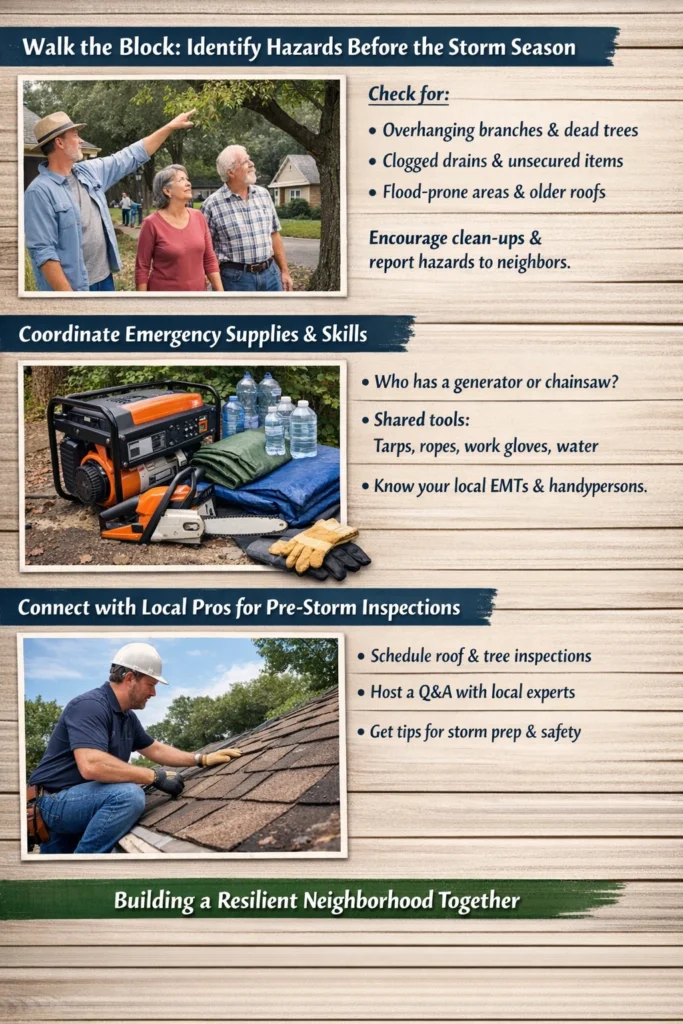
3. Walk the Block: Identify Hazards Before the Storm Season
Some problems are predictable if you take a quick look around.
Neighborhood hazard walk
Once or twice a year, walk the block with a few neighbors to look for overhanging branches, dead trees, clogged street drains, and unsecured items.
Encourage homeowners to trim risky branches, secure outdoor furniture, and clear gutters.
Know your “problem spots”
Low-lying areas that collect water
Streets that flood easily
Portions of the block with lots of older roofs or large, mature trees
Share findings politely and constructively
The goal is not to shame anyone, it’s to protect the whole neighborhood when the wind and rain arrive.
This kind of proactive neighborhood storm preparation lowers everyone’s risk and helps the whole community bounce back faster.
4. Coordinate Basic Emergency Supplies and Skills
You don’t need everyone to buy everything, but you can pool resources. Neighborhood storm preparation makes it easier to coordinate what’s available and who can help.
Neighborhood “toolkit” overview
Who has a generator?
Who has chainsaws and knows how to use them safely?
Who has ladders, tarps, or shop vacs?
Shared supply ideas
Some neighborhoods keep a small stock of communal tarps, rope, work gloves, and bottled water at a central home or community space.
Others coordinate on gas cans, extension cords, or battery banks.
Skill sharing
Identify people with useful skills, EMTs, nurses, contractors, handypersons, and make sure their contact info is in the neighborhood list (with consent).
This is Community & Local Coverage at a practical level: combining what everyone has so the neighborhood is stronger as a whole.
5. Connect with Local Pros for Pre-Storm Inspections and Guidance
Your local experts are a big part of your storm-prep bench.
Schedule preventive inspections
Encourage homeowners to get roofs, trees, and drainage systems checked before peak storm season.
Even one or two inspections per year can catch issues early.
Host a short info session or Q&A
Invite a local roofing company, emergency manager, or utility representative to speak at a neighborhood meeting or virtual call.
Topics can include: recognizing storm damage, basic safety, and what to do right after a storm.
Document and share key takeaways
Summarize recommendations and share them with neighbors who couldn’t attend.
Bringing in local experts strengthens Community & Local Coverage by blending professional insight with neighborhood-level readiness.
6. Plan How You’ll Communicate During and After a Storm
Storms often knock out power, cell towers, or internet, so have a Plan B. Neighborhood storm preparation includes planning for communication when the usual tools fail.
Primary channels
A neighborhood group text, messaging app, or email list can work for most situations.
Backup plans
Decide on simple rules like: “If phones are down, once it’s safe, we’ll check on each other in person by going door-to-door on this side of the street.”
Consider low-tech backups like printed contact lists and agreed meeting points.
Information filters
Designate 1–2 neighbors to keep an eye on official updates (city, county, weather) and share only reliable information, not rumors.
Strong communication is a pillar of effective Community & Local Coverage, especially when the usual tools glitch out.
7. Practice Small Drills and “What-If” Scenarios
You don’t have to turn your block into a disaster movie set, but a little practice helps.
Simple scenarios to walk through together:
“What if we lose power for 48 hours?”
“What if a big branch blocks the street?”
“What if several roofs are damaged at once?”
Talk through roles and responses
Who checks on vulnerable neighbors?
Who calls what number?
Where do people go if their home is not safe?
Even talking through these questions once a year can make everyone more confident and coordinated when a real storm hits.
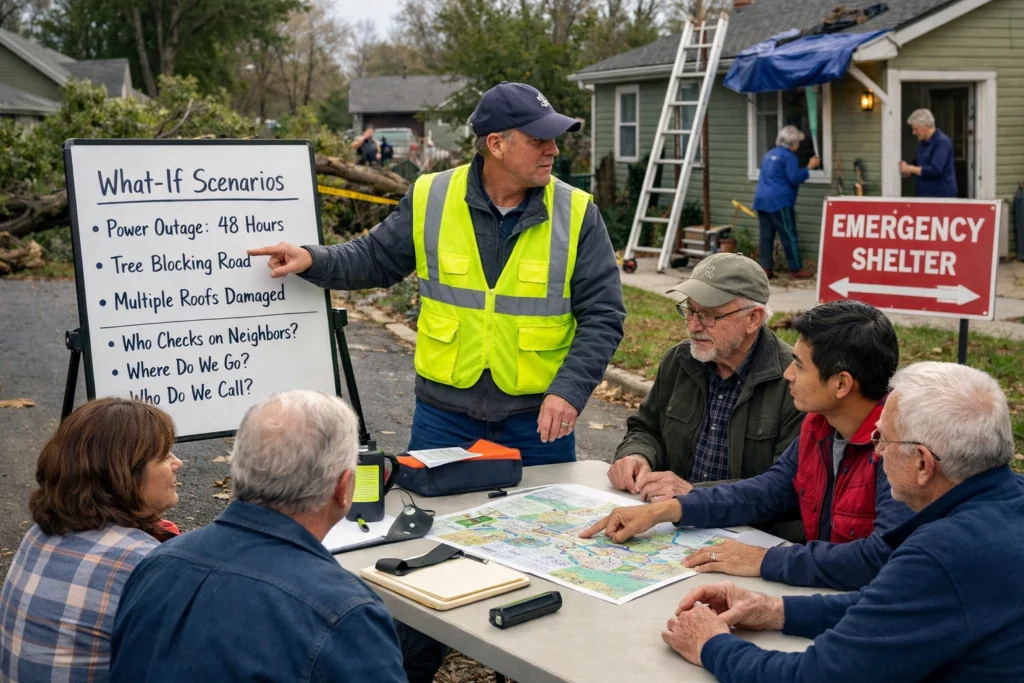
7. Practice Small Drills and “What-If” Scenarios
You don’t have to turn your block into a disaster movie set, but a little practice helps.
Simple scenarios to walk through together:
“What if we lose power for 48 hours?”
“What if a big branch blocks the street?”
“What if several roofs are damaged at once?”
Talk through roles and responses
Who checks on vulnerable neighbors?
Who calls what number?
Where do people go if their home is not safe?
Even talking through these questions once a year can make everyone more confident and coordinated when a real storm hits.
Strengthen Your Community & Local Coverage Before the Next Storm
If your neighborhood is ready to get more proactive about storm prep, partnering with trusted local experts is a smart next step. Ready for a professional roof inspection from a community-focused local team? Contact CarbonBlack Roofing today to schedule a pre-storm inspection and strengthen your Community & Local Coverage before the next big storm hits.
FAQ
1. What is “Community & Local Coverage” in storm preparation?
It’s the combined support of neighbors, local businesses, and community organizations working together before, during, and after storms. In preparation mode, that means shared contacts, local contractor relationships, and clear plans for checking on each other.
2. How can small neighborhoods with few people still prepare effectively?
Even a small cul-de-sac or apartment building can create a simple contact list, identify vulnerable residents, and share a short list of trusted local contractors. You don’t need a big HOA, just a few people willing to coordinate basic steps together.
3. Do neighborhoods need formal organizations to do this?
No. HOAs and neighborhood associations can help, but informal groups work too. A few neighbors starting a group chat, gathering contacts, and sharing basic plans can dramatically improve readiness.
4. How often should neighborhoods review their storm plans?
At least once a year, ideally before peak storm season. It’s a good time to update contact info, refresh supply lists, and remind everyone where to find key information.
5. How does working with local roofing companies fit into our neighborhood plan?
Local roofing companies can provide pre-storm inspections, help you understand roof vulnerabilities, and be ready to respond quickly if damage occurs. Building that relationship ahead of time ensures your Community & Local Coverage includes reliable professional support.
Key Takeaways
Community & Local Coverage starts at the neighborhood level with simple steps like shared contact lists and check-in plans.
Pooling resources and skills, tools, supplies, and know-how, makes the entire block stronger before storms hit.
Partnering with local pros, including roofing companies, adds expert insight to community readiness.
Clear communication plans and basic “what-if” scenarios reduce confusion and speed up response when storms arrive.
Annual reviews and small updates keep your neighborhood’s storm preparedness realistic, current, and effective.