Roofing Basics: Roofing Terms Every Homeowner Should Know
Ever read a roofing estimate and wonder what a soffit, fascia, drip edge, or ridge vent actually does? You’re not alone. Roofing projects come with a lot of terminology, and understanding roofing basics makes it easier to navigate maintenance, storm inspections, and repair decisions. Whether you’re comparing roof types or reviewing a roofing guide before a replacement, knowing key roof components helps you feel confident and informed. With support from reputable roofing partners like CarbonBlack, homeowners can approach their roofing needs with clarity instead of confusion.
Essential Roofing Terms Every Homeowner Should Know
Roof Decking
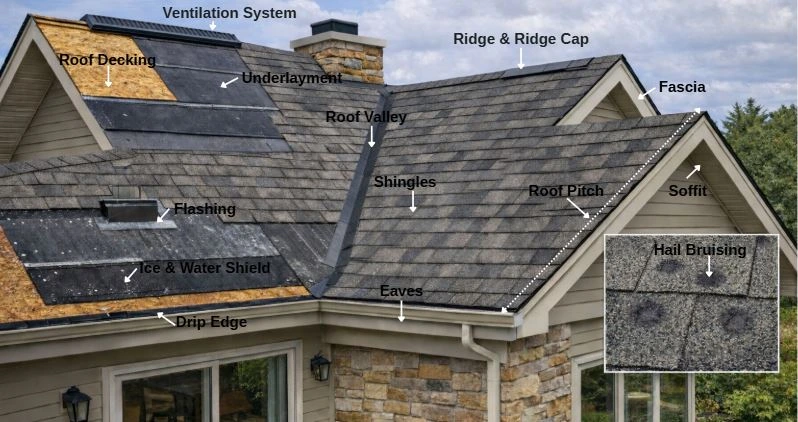
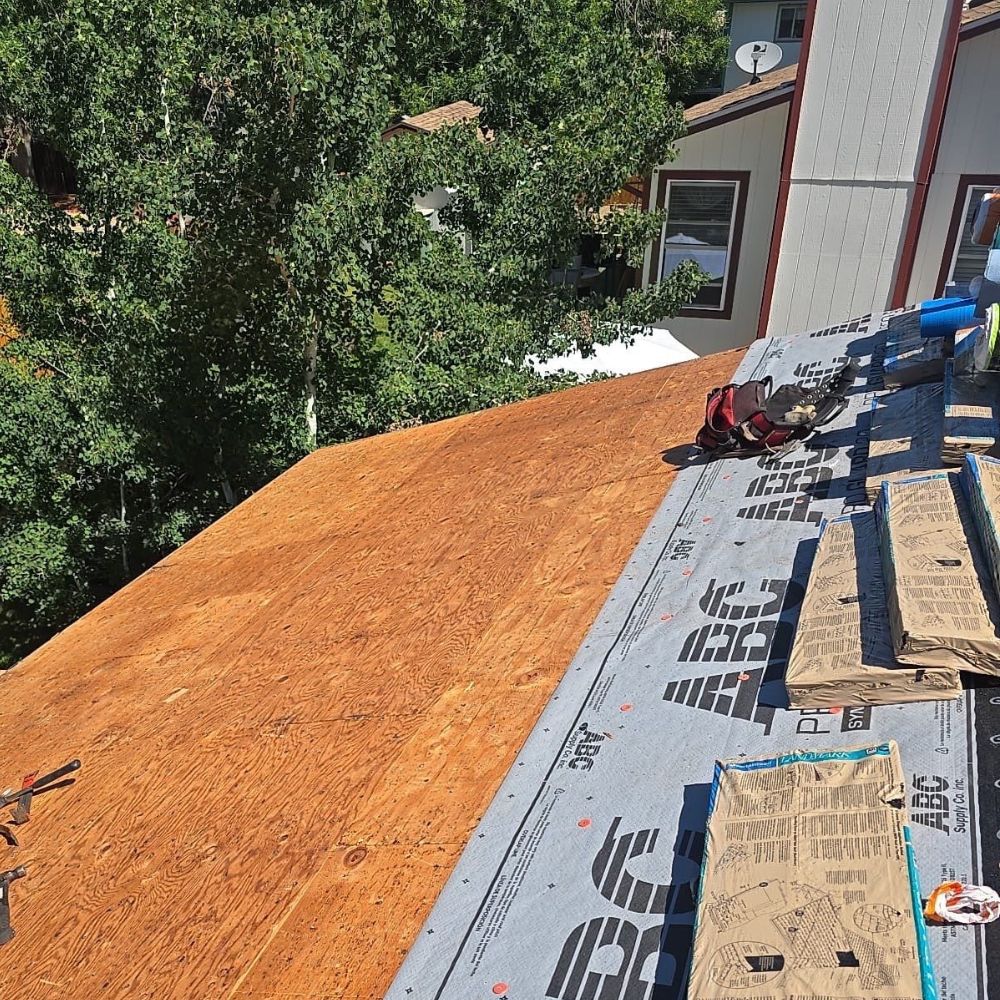
Decking is the base layer of the roof, typically made from plywood or OSB panels. It provides structural support for all roof components, including underlayment and shingles. If decking becomes soft or damaged from moisture, it must be replaced during roof repairs.
Underlayment
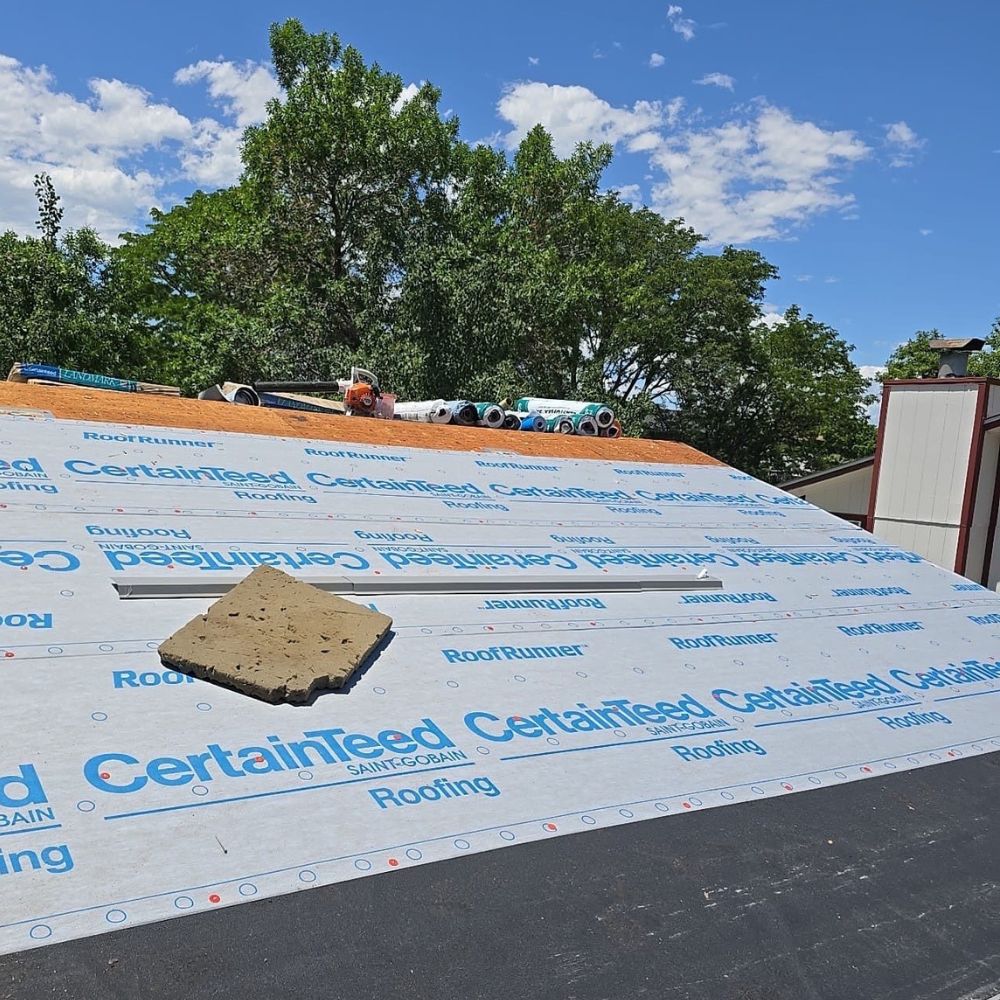
Underlayment is a moisture-resistant layer installed directly over decking and beneath shingles. Common types include felt, synthetic, and peel-and-stick waterproof membranes. It’s a critical component that prevents leaks and protects the home during storms.
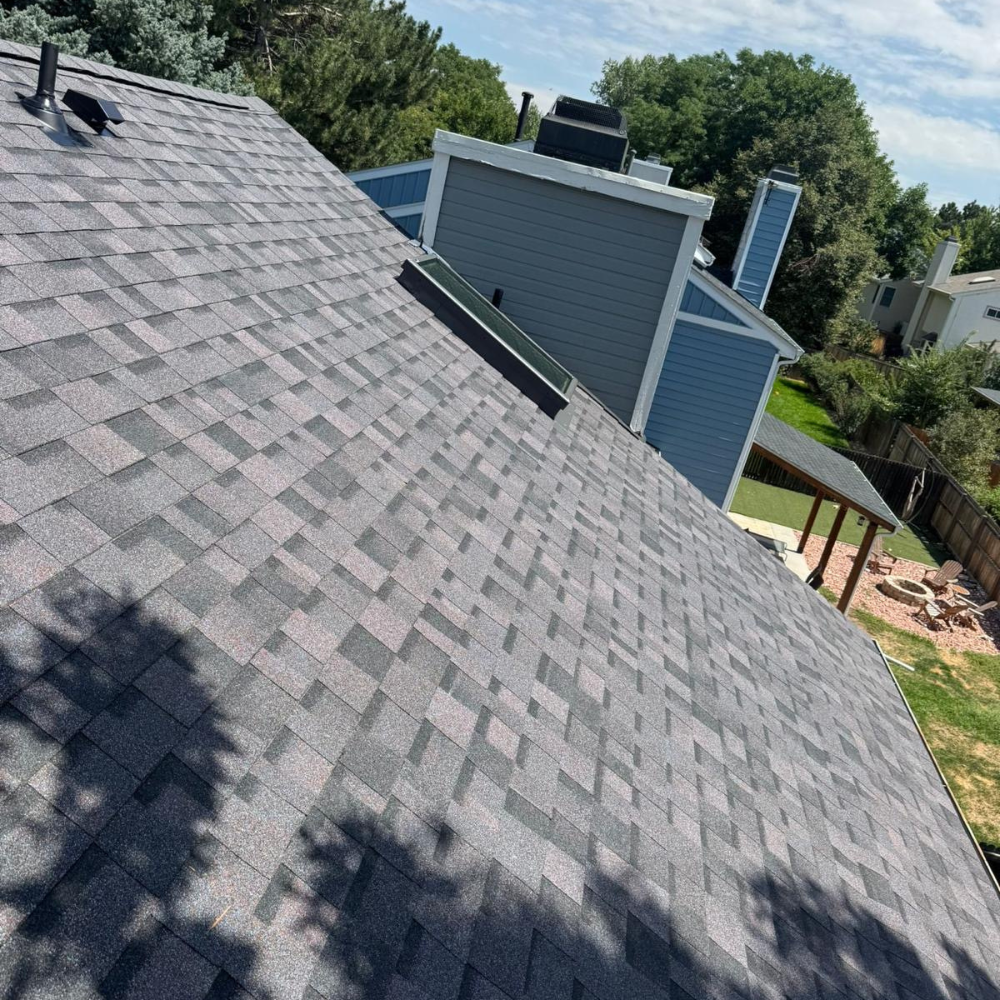
Shingles form the outermost protective layer of a roof. Most residential roofing uses asphalt shingles, though metal, wood, slate, and tile are also common. Shingles protect against weather, UV exposure, and storm impact.
Roof Decking
Decking is the base layer of the roof, typically made from plywood or OSB panels. It provides structural support for all roof components, including underlayment and shingles. If decking becomes soft or damaged from moisture, it must be replaced during roof repairs.
Underlayment
Underlayment is a moisture-resistant layer installed directly over decking and beneath shingles. Common types include felt, synthetic, and peel-and-stick waterproof membranes. It’s a critical component that prevents leaks and protects the home during storms.
Shingles form the outermost protective layer of a roof. Most residential roofing uses asphalt shingles, though metal, wood, slate, and tile are also common. Shingles protect against weather, UV exposure, and storm impact.
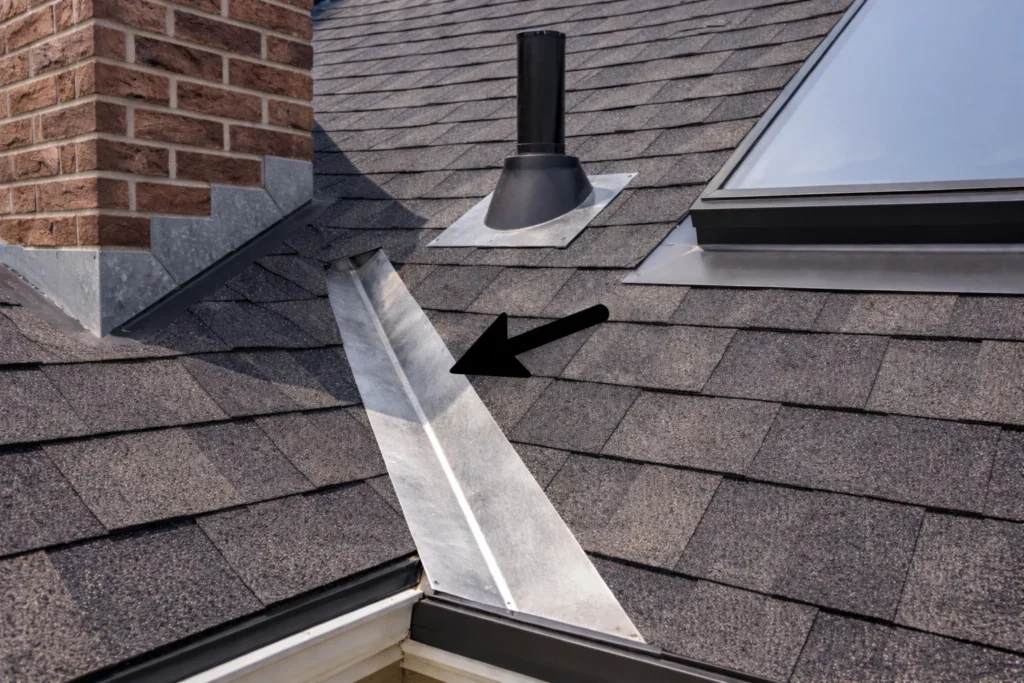
Flashing
Flashing is thin metal used to seal and waterproof roof penetrations like chimneys, vents, skylights, and valleys. It’s one of the most important elements for preventing leaks.
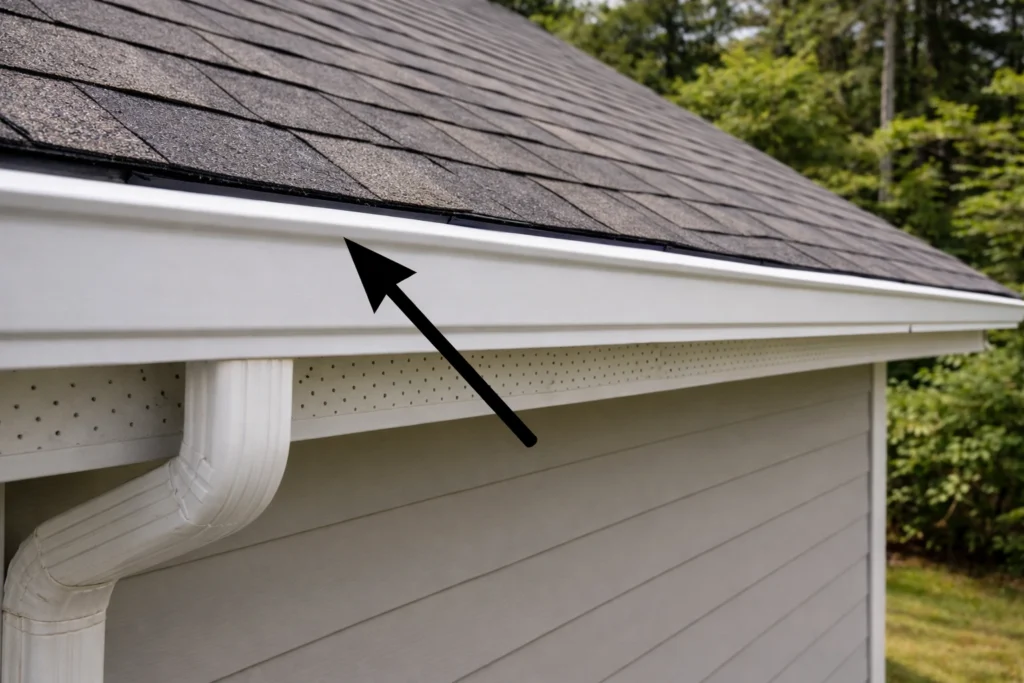
Fascia
Fascia boards run along the edge of the roof and anchor the gutters. They help close off and protect the roof structure from weather and pests.
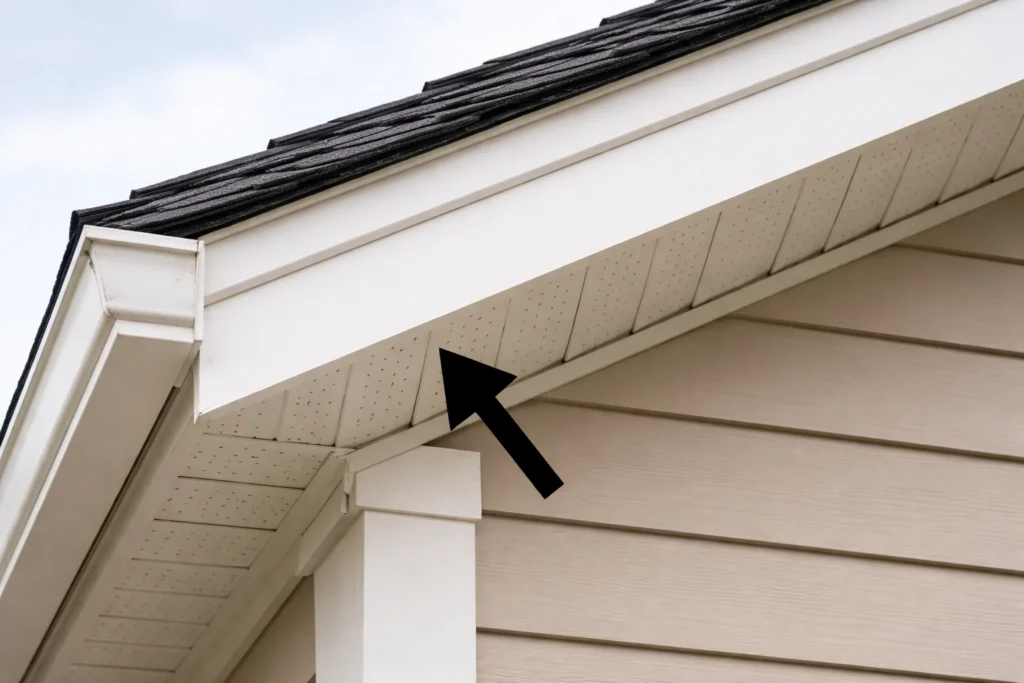
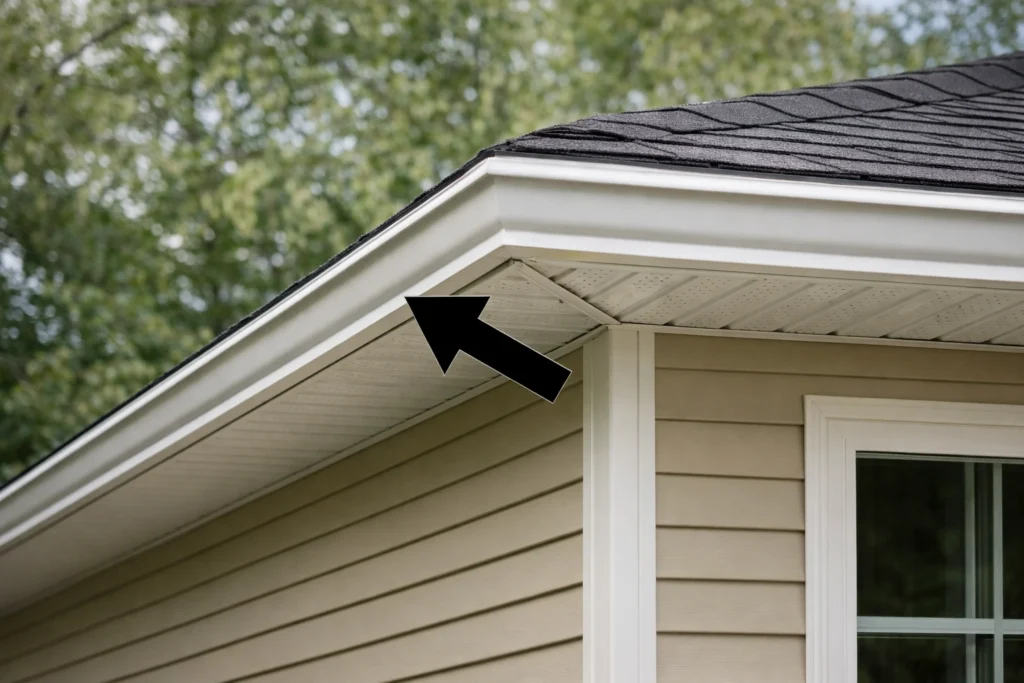
Soffit
Soffits sit under the roof’s overhang and help ventilate the attic by allowing fresh air to enter. Proper airflow prevents mold, moisture buildup, and shingle deterioration.
Flashing
Flashing is thin metal used to seal and waterproof roof penetrations like chimneys, vents, skylights, and valleys. It’s one of the most important elements for preventing leaks.
Fascia
Fascia boards run along the edge of the roof and anchor the gutters. They help close off and protect the roof structure from weather and pests.
Soffit
Soffits sit under the roof’s overhang and help ventilate the attic by allowing fresh air to enter. Proper airflow prevents mold, moisture buildup, and shingle deterioration.
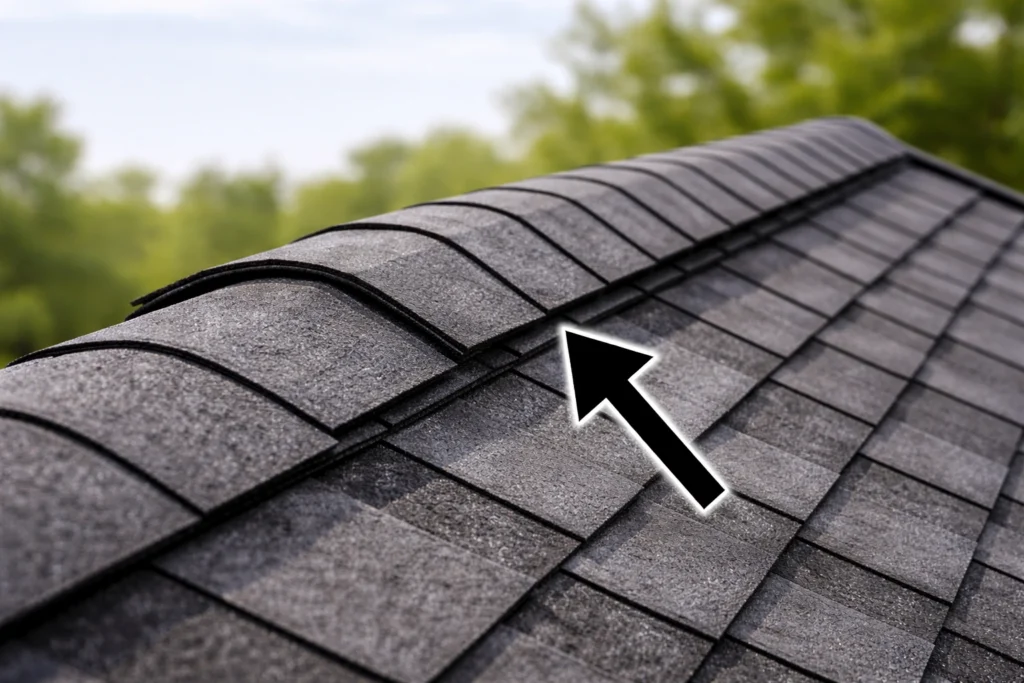
Ridge & Ridge Cap
The ridge is the highest point where two roof planes meet. Ridge caps are specialized shingles or metal components installed over the peak to provide weather protection and ventilation.
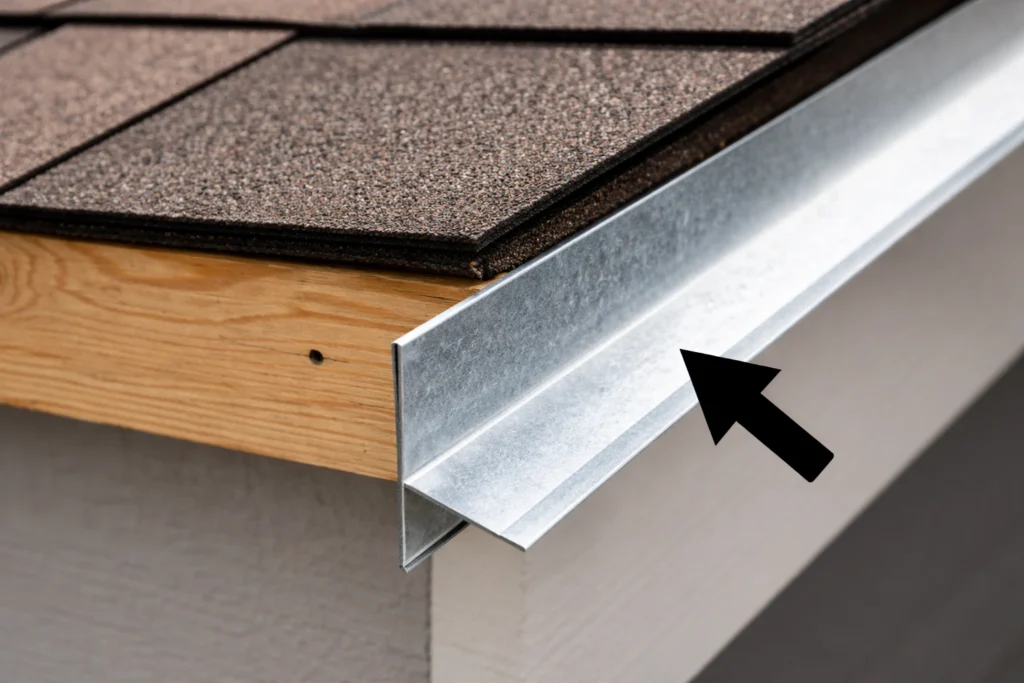
Drip Edge
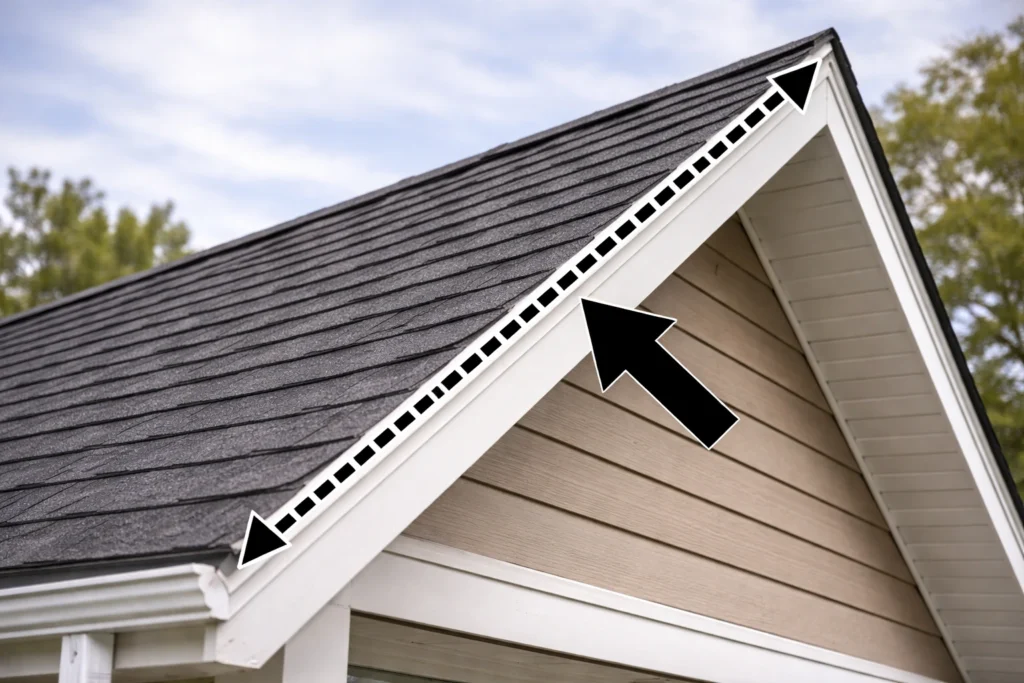
The drip edge is a metal flashing installed along the roof edges.It directs water away from the fascia and prevents wind-driven rain from entering under shingles.
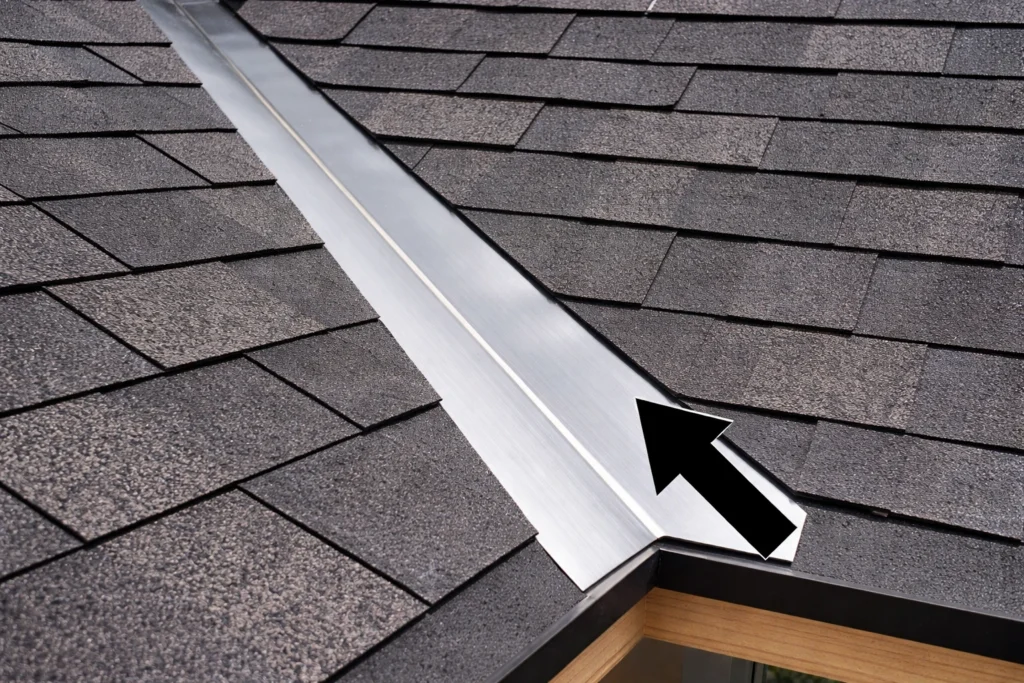
Roof Valley
Valleys are the low areas where two roof slopes meet.They carry large volumes of water during storms and require reinforced underlayment and flashing.
Ridge & Ridge Cap
The ridge is the highest point where two roof planes meet. Ridge caps are specialized shingles or metal components installed over the peak to provide weather protection and ventilation.
Drip Edge
The drip edge is a metal flashing installed along the roof edges.It directs water away from the fascia and prevents wind-driven rain from entering under shingles.
Roof Valley
Valleys are the low areas where two roof slopes meet.They carry large volumes of water during storms and require reinforced underlayment and flashing.
Eaves
Eaves extend beyond the walls of the home and help direct water away from the structure. They also house fascia and soffit components.
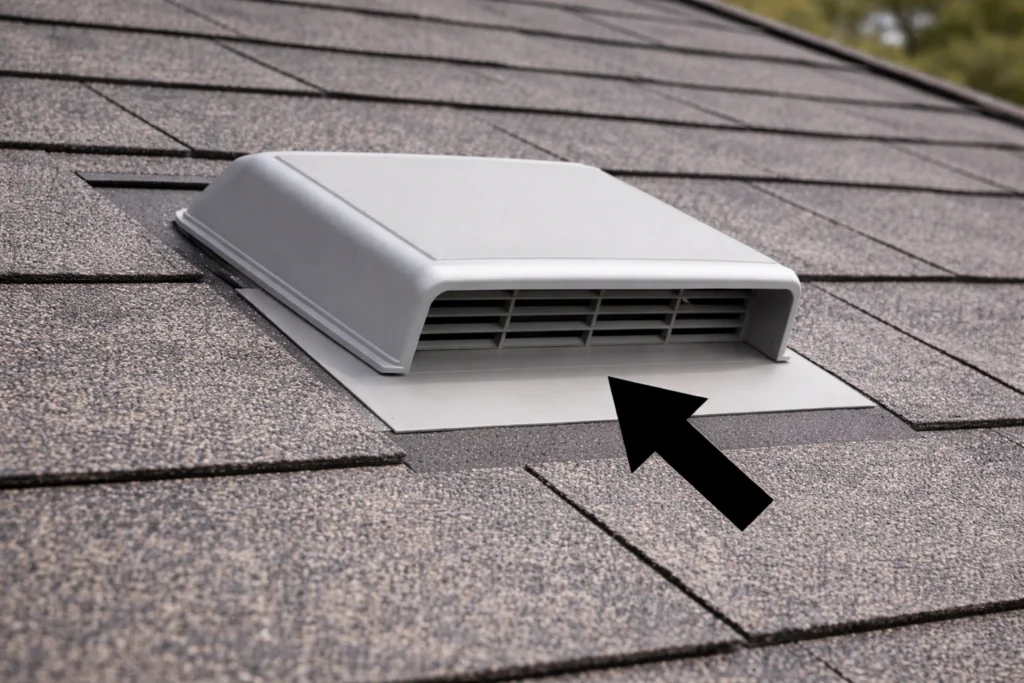
Ventilation System
Ridge, soffit, attic, and gable vents help control heat and moisture, protecting the roof and improving efficiency. The U.S. Department of Energy says proper ventilation reduces moisture buildup.
Roof Pitch
Pitch refers to the steepness or angle of the roof. Higher pitches shed water more efficiently and may require specific roof types or installation methods.
Eaves
Eaves extend beyond the walls of the home and help direct water away from the structure. They also house fascia and soffit components.
Ventilation System
Ridge, soffit, attic, and gable vents help control heat and moisture, protecting the roof and improving efficiency. The U.S. Department of Energy says proper ventilation reduces moisture buildup.
Roof Pitch
Pitch refers to the steepness or angle of the roof. Higher pitches shed water more efficiently and may require specific roof types or installation methods.
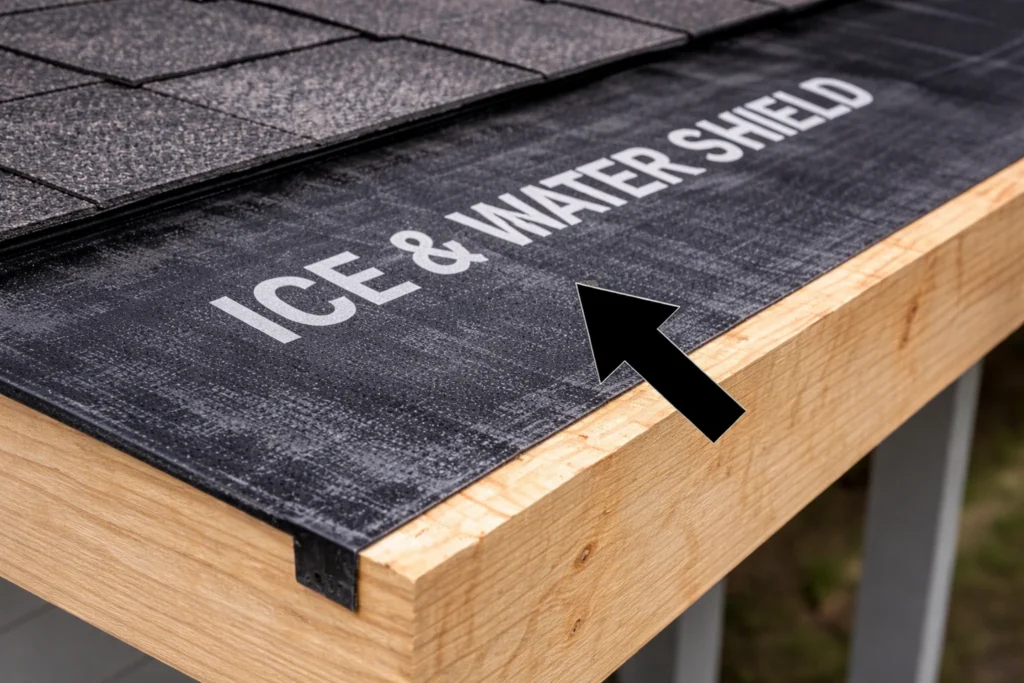
Ice and Water Shield
A waterproof membrane typically installed along roof edges and valleys. It offers added protection during freezes, thaws, and heavy rain.
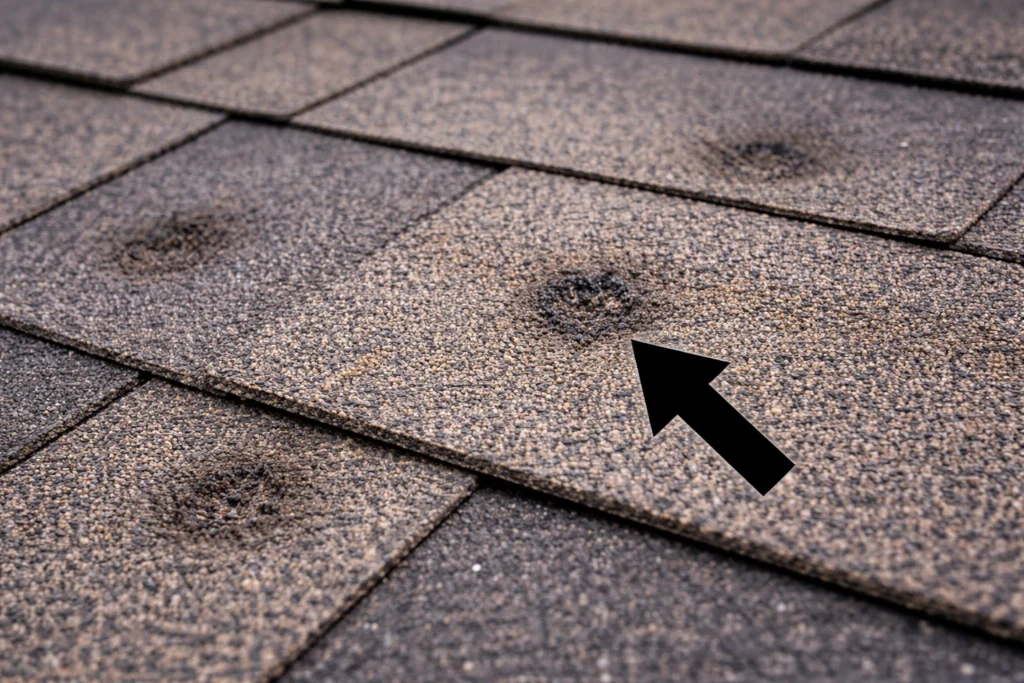
Hail Bruising
Small impact marks indicating hail damage beneath the shingle surface. These bruises weaken shingles and may lead to future leaks. Reference hail identification here:
These insurance terms often show up in storm-damage claims. Understanding them helps homeowners navigate roofing quotes and insurance coverage. See the full insurance guide.
Ice and Water Shield
A waterproof membrane typically installed along roof edges and valleys. It offers added protection during freezes, thaws, and heavy rain.
Hail Bruising
Small impact marks indicating hail damage beneath the shingle surface. These bruises weaken shingles and may lead to future leaks. Reference hail identification here:
These insurance terms often show up in storm-damage claims. Understanding them helps homeowners navigate roofing quotes and insurance coverage. See the full insurance guide.
Know Your Roof’s Condition with Expert Help
If you want a professional assessment or need help understanding your roof’s condition, connect with the experts at Carbon Black. Request your inspection or reach out here.
FAQ
1. Why should homeowners learn roofing terms?
Knowing roofing terminology makes conversations with contractors easier and helps homeowners understand estimates, repair recommendations, and insurance documentation.
2. What are the core components of a residential roof?
The main components include decking, underlayment, shingles, flashing, fascia, soffit, and ventilation systems. Together, these elements protect your home from weather damage.
3. Are all roof types built with the same components?
Most share similar structural elements, but materials and installation methods vary. For example, metal roof systems use different fasteners and underlayment than asphalt shingles.
4. How often should I inspect my roof?
At least twice a year and after major storms. Regular inspections help catch damage early before it becomes costly.
5. Can understanding roofing terms help with insurance claims?
Absolutely. Familiarity with terms like ACV, RCV, and depreciation helps homeowners understand their policies and communicate effectively with adjusters.
Key Takeaways
Roofing basics start with understanding common roofing terms.
Knowing roof components helps homeowners make informed decisions.
Flashing, underlayment, and ventilation are key to long-lasting residential roofing.
Internal and external resources strengthen your roofing knowledge.
Carbon Black provides trustworthy roofing education and storm-ready guidance.