What Is Roof Underlayment and Why It Matters
Why the Layer You Don’t See Matters Most
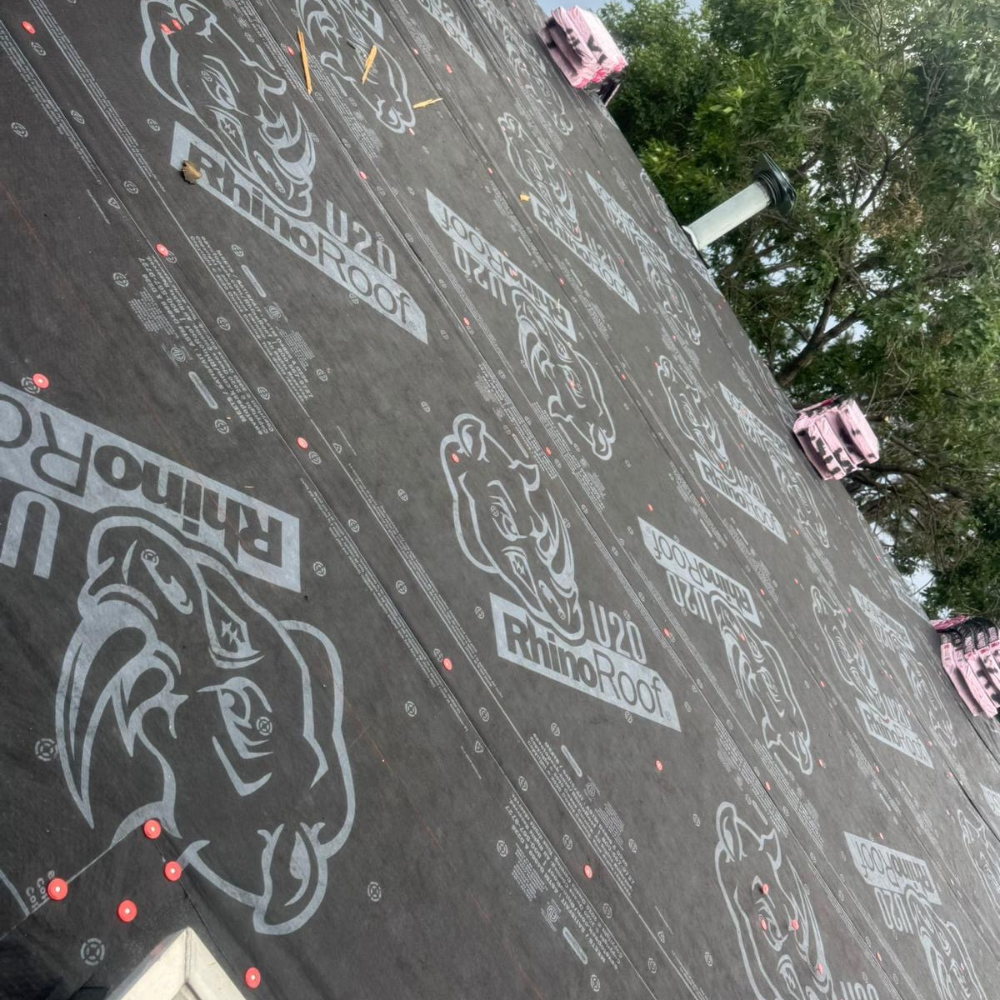
When most homeowners think about roofing, they picture shingles. But what protects your home if shingles fail?
That protection comes from the underlayment, the hidden waterproof roofing layer that acts as a secondary defense against water intrusion. Understanding roof underlayment types is essential if you’re replacing your roof or preparing for Colorado’s harsh weather conditions.
Let’s break down how this critical layer works and why it matters.
What Is Roof Underlayment?
Roof underlayment is a protective material installed directly over the roof decking and beneath the shingles. Its primary purpose is to create a moisture barrier that prevents water from reaching the wood structure of your home.
It plays a major role in roofing components explained in any professional roof system.
Without proper underlayment, even minor shingle damage can lead to costly leaks and structural rot.
According to the National Roofing Contractors Association (NRCA), underlayment provides temporary weather protection during installation and long-term moisture defense after completion.
Roof Underlayment Types
There are three primary roof underlayment types used in residential roofing.
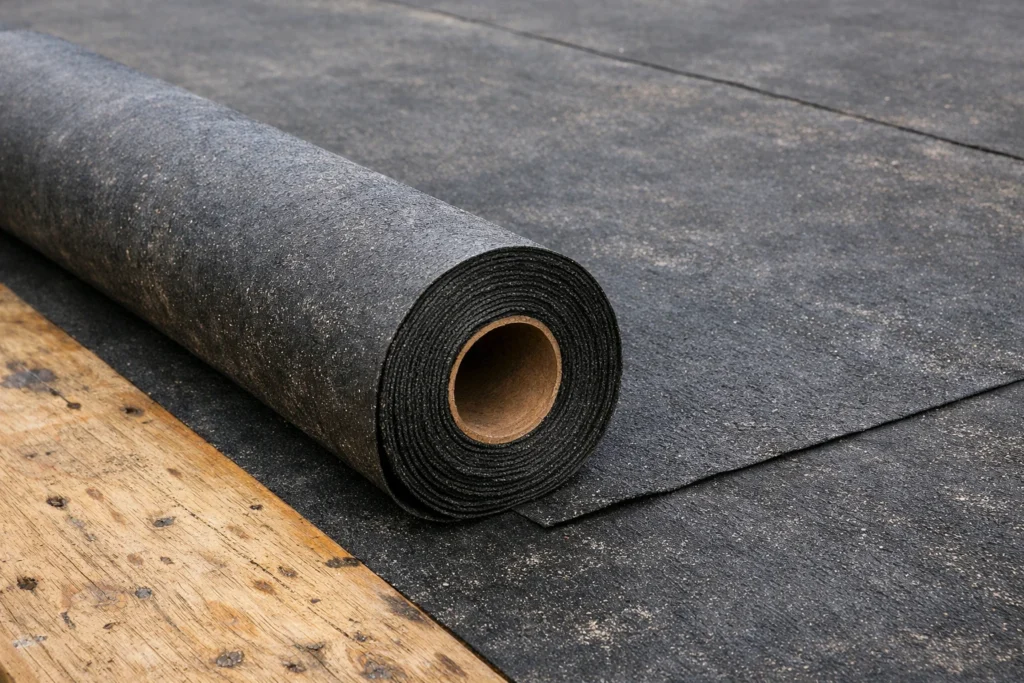
1. Asphalt-Saturated Felt (Felt Underlayment)
Often called “tar paper,” felt underlayment has been used for decades.
Pros:
- Affordable
- Widely available
- Time-tested material
Cons:
- Tears easily
- Absorbs moisture
- Heavier and less durable than modern options
Felt is still used in many roofing systems but is becoming less common in storm-prone areas.
It typically comes in 15-pound or 30-pound weights, with the heavier option offering slightly better durability and protection.
2. Synthetic Underlayment
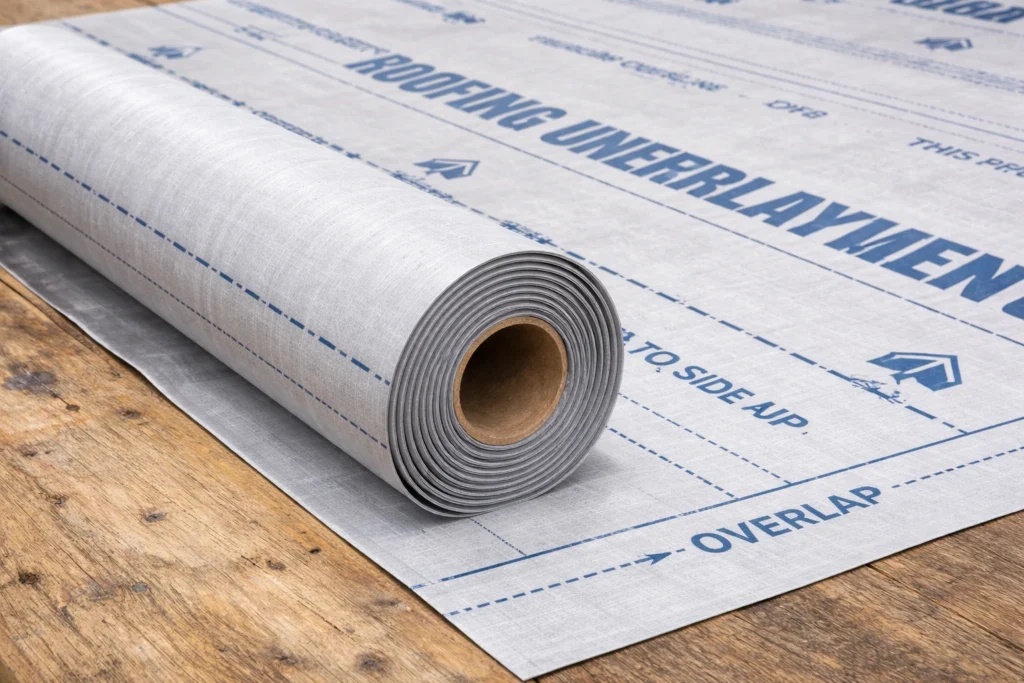
Synthetic underlayment is made from woven or spun polyethylene or polypropylene.
This is now the most popular option for modern roofing systems.
Pros:
- Lightweight
- Highly tear-resistant
- Water-resistant
- UV-resistant
- Longer lifespan
When comparing synthetic vs felt underlayment, synthetic wins in durability and moisture resistance, especially in Colorado’s high UV and hail conditions.
Many roofing contractors now recommend synthetic for long-term performance.
Rubberized Asphalt (Ice and Water Shield)
This is a premium waterproof roofing layer used in vulnerable areas such as:
- Roof valleys
- Around chimneys
- Along eaves
- Near skylights
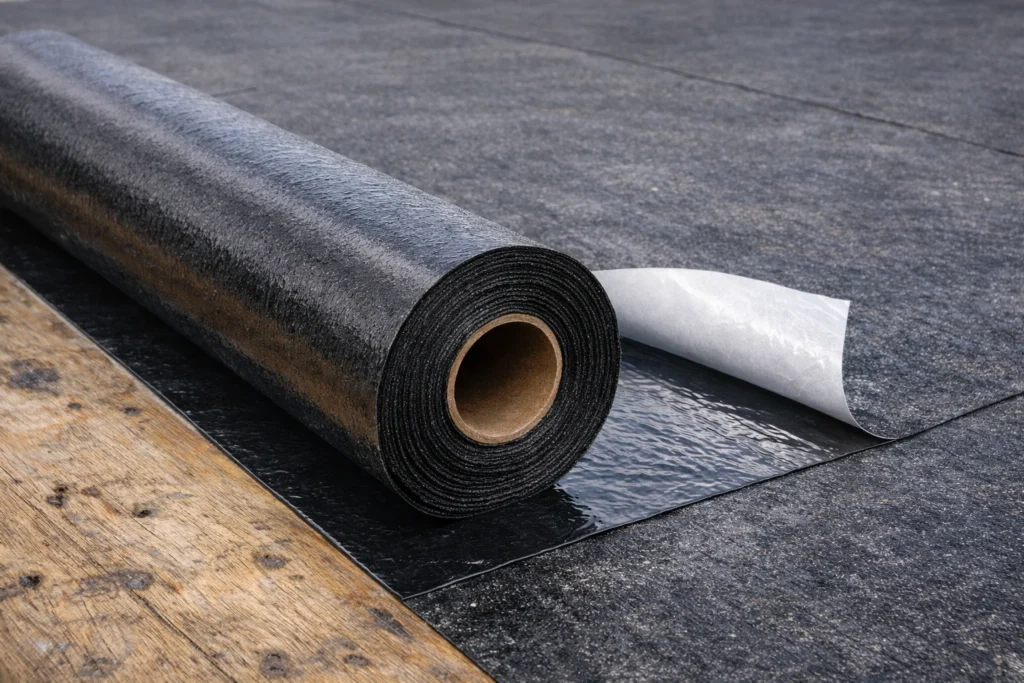
It features a self-adhering membrane that seals around nails, making it ideal for leak-prone zones. Its rubberized asphalt composition creates a watertight barrier that helps prevent damage from wind-driven rain and ice dams. Because it bonds directly to the roof deck, it provides an added layer of protection in areas most susceptible to water intrusion.
Learn more about how we protect vulnerable areas on our roof replacement page.
1. Asphalt-Saturated Felt (Felt Underlayment)
Often called “tar paper,” felt underlayment has been used for decades.
Pros:
- Affordable
- Widely available
- Time-tested material
Cons:
- Tears easily
- Absorbs moisture
- Heavier and less durable than modern options
Felt is still used in many roofing systems but is becoming less common in storm-prone areas.
It typically comes in 15-pound or 30-pound weights, with the heavier option offering slightly better durability and protection.
2. Synthetic Underlayment
Synthetic underlayment is made from woven or spun polyethylene or polypropylene.
This is now the most popular option for modern roofing systems.
Pros:
- Lightweight
- Highly tear-resistant
- Water-resistant
- UV-resistant
- Longer lifespan
When comparing synthetic vs felt underlayment, synthetic wins in durability and moisture resistance, especially in Colorado’s high UV and hail conditions.
Many roofing contractors now recommend synthetic for long-term performance.
Rubberized Asphalt (Ice and Water Shield)
This is a premium waterproof roofing layer used in vulnerable areas such as:
- Roof valleys
- Around chimneys
- Along eaves
- Near skylights
It features a self-adhering membrane that seals around nails, making it ideal for leak-prone zones. Its rubberized asphalt composition creates a watertight barrier that helps prevent damage from wind-driven rain and ice dams. Because it bonds directly to the roof deck, it provides an added layer of protection in areas most susceptible to water intrusion.
Learn more about how we protect vulnerable areas on our roof replacement page.
Why Roof Underlayment Matters in Colorado
Colorado’s climate brings:
- Heavy snow loads
- Ice dams
- Hailstorms
- Intense UV exposure
Underlayment provides protection when shingles crack, blow off, or become damaged.
Without it, water can quickly penetrate decking and lead to mold, rot, and structural weakening.
The International Code Council (ICC) also mandates underlayment in residential roofing systems as part of modern building codes.
Synthetic vs Felt Underlayment, Which Should You Choose?
If budget is the only concern, felt may work.
If long-term protection, durability, and weather resistance matter, synthetic underlayment is typically the better choice.
For homeowners investing in a full roof replacement, upgrading to synthetic underlayment often adds minimal cost while significantly improving protection.
If you’re unsure which roof underlayment types are best for your home, a professional inspection can help.
Ready for a professional roof inspection?
Contact CarbonBlack Roofing today to ensure your roof underlayment and entire roofing system are protecting your home properly.
FAQ
1. Is roof underlayment required by code?
Yes. Most building codes require underlayment as a moisture barrier beneath shingles. It protects decking and provides temporary weather resistance during installation.
2. How long does synthetic underlayment last?
Synthetic underlayment typically lasts longer than felt and can withstand extended UV exposure. It often matches or exceeds the lifespan of asphalt shingles.
3. Can underlayment prevent roof leaks?
It significantly reduces leak risk. While shingles are the first defense, the underlayment acts as a backup waterproof roofing layer.
4. Is ice and water shield the same as underlayment?
Ice and water shield is a premium type of underlayment used in vulnerable areas. It self-seals around nails and offers enhanced leak protection.
5. Does underlayment increase roof replacement cost?
It adds a small portion to overall cost, but the long-term protection often outweighs the upfront expense.
Key Takeaways
- Roof underlayment is a critical waterproof roofing layer beneath shingles.
- Synthetic underlayment offers superior durability compared to felt.
- Ice and water shield protects high-risk areas from leaks.
- Proper underlayment extends roof lifespan and prevents moisture damage.
- Colorado weather makes high-quality underlayment especially important.