Thinking about going solar but unsure whether your roof can handle it? You’re not alone. As solar technology becomes more accessible, homeowners are asking important Roofing Basics questions about roof age, structural integrity, and the best materials for solar panel installations. Thanks to modern technology and innovation, today’s roofing and solar systems can work together more efficiently than ever. Before investing in solar, it’s essential to understand whether your roof is compatible, safe, and optimized for long-term performance.
How to Know if Your Home Is Solar-Ready
Determining if your home can support solar panels involves evaluating several roof characteristics. Below, we break down the essential factors professionals examine during a solar-ready roof assessment.
Roof Age and Condition
One of the first things to review is your roof’s age. Most solar panels last 25 to 30 years, which means your roof should have enough remaining life to match.
General Guidelines
Asphalt shingle roofs older than 15 to 20 years may need replacement.
Metal roofs often last 40 to 70 years and are ideal for solar.
Tile roofs last longer but require specialized mounting hardware.
If your roof is aging or damaged, a pre-solar upgrade may be necessary. For help assessing roof condition, explore.
Roof Load Capacity for Solar Panels
Solar panels typically weigh between 3 and 5 pounds per square foot. Most roofs can handle the additional load, but verification is key.
Professionals assess:
Dead load (permanent roof weight)
Live load (snow, maintenance activity)
Additional solar system weight
CarbonBlack Roofingprovides inspections that help determine structural readiness for solar.
Roof Structural Requirements for Solar Panels
Solar panels add weight to your roof, and not all structures support it equally.
Structural elements to evaluate:
Load-bearing capacity of rafters or trusses
Signs of sagging or weakness
Decking condition
Need for reinforcement
A structural engineer or certified roofer can determine whether your roof can safely support panels.
External source for building standards: International Association of Certified Home Inspectors (InterNACHI)
Roof Slope and Sun Exposure
A solar-ready roof needs proper tilt and sun access.
Ideal Roof Conditions
South-facing orientation
Minimal shading from trees or buildings
Roof pitch between 15 to 40 degrees
Shade from chimneys, dormers, or tree branches can reduce efficiency. Tools like solar pathfinders help measure sunlight exposure year-round.
Best Roofing Materials for Solar Panels
Not all roofing materials work the same with solar installations. Some make mounting easier, while others require special hardware.
Asphalt Shingles
Most common material and very compatible with standard installation methods. How it works:
Below is a quick overview of installation expectations for common materials.
Solar Installation on Asphalt Shingle Roofs
Straightforward process
Budget-friendly
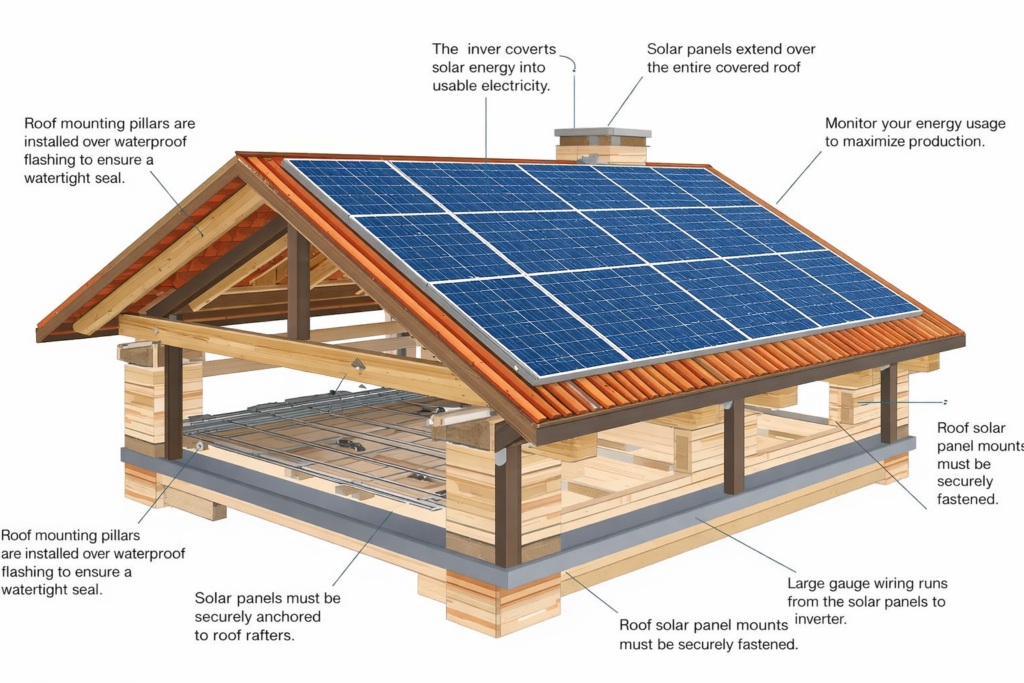
Uses lag bolts and flashing for waterproof sealing
Solar Installation on Metal Roofs
Easiest installation type
No drilling required on standing seam
Best longevity match
Solar Installation on Tile Roofs
Requires extra labor
Tiles may need to be lifted or replaced
Best done with experienced solar installers
Ready to find out if your roof is solar-ready?
Schedule a roofing assessment to evaluate structural safety, material compatibility, and long-term performance.Schedule an inspection with CarbonBlack today.
FAQ
1. How old can my roof be before installing solar panels?
Roofs older than 15 to 20 years may need replacement before adding solar. A newer roof ensures materials last as long as the solar system.
2. Can solar panels be installed on all roofing materials?
Most materials are compatible, including asphalt, metal, tile, and flat roofs. Installation methods vary based on material type.
3. Do solar panels damage the roof?
When installed properly with flashing and secure mounts, solar panels do not damage the roof. Poor installation, however, can cause leaks or structural issues.
4. How much weight do solar panels add to a roof?
Most systems add 3 to 5 pounds per square foot, which is within the safe load capacity for most roofs when inspected by a professional.
5. Does shade affect solar readiness?
Yes. Heavy shade from trees, chimneys, or surrounding structures can lower panel efficiency. A solar analysis helps determine sunlight patterns.
Key Takeaways
Solar-ready roofing depends on material type, roof age, and structural integrity.
Asphalt, metal, tile, and flat roofs can all support solar with the right installation method.
Load capacity and roof slope play major roles in solar efficiency.
Technology helps measure sunlight exposure and structural readiness.
CarbonBlack provides expert assessments to prepare roofs for solar installations.